Kickstarter vs Indiegogo: Which Platform Should You Actually Launch On?
Apr 6, 2026
Choosing between Kickstarter and Indiegogo is one of the first real decisions you make as a crowdfunding creator. And honestly, it's one that most people get wrong, not because they picked the "bad" platform, but because they picked without actually understanding what each one is built for.
Both platforms will let you raise money. Both have success stories. But they work very differently, attract different kinds of backers, and suit very different types of projects. Getting this decision right before you launch can save you a lot of frustration later.
Here's an honest breakdown of both.
What Kickstarter Is Actually Good At
Kickstarter is the name most people think of when they hear “crowdfunding.” It launched in 2009 and has built a reputation as the place where creative projects, gadgets, and physical products come to life. That reputation is not accidental. Kickstarter has a massive, engaged community of people who genuinely love discovering new things and backing creators.
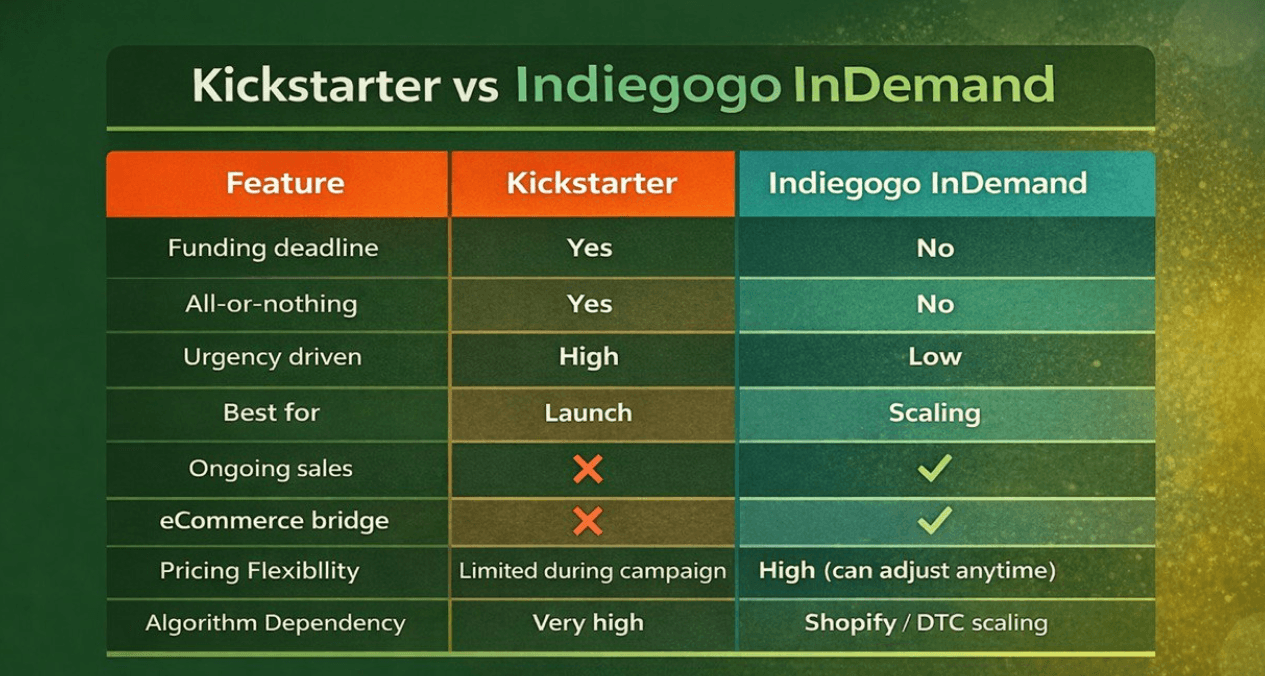
The platform runs on an all-or-nothing funding model. If your campaign hits its goal, you get the money. If it doesn't, every backer gets refunded, and you walk away with nothing. That sounds scary, but it's actually one of the reasons Kickstarter backers tend to trust the platform more. They know creators are incentivized to set realistic goals and deliver on their promises.
Kickstarter also has stronger organic discovery than Indiegogo. If your campaign gains momentum early, the platform will surface it to more people through its newsletter, staff picks, and category pages. This built-in traffic is genuinely valuable, especially if you're launching without a huge marketing budget.
Where Kickstarter works best: physical products, design objects, board games, books, music albums, and creative projects with a clear finished product at the end.
What Indiegogo Is Actually Good At
Indiegogo launched around the same time as Kickstarter, but took a different path. Where Kickstarter kept things curated and creative, Indiegogo opened up to a broader range of projects and gave creators more flexibility in how they run their campaigns.
The biggest structural difference is that Indiegogo offers flexible funding. You can choose to keep whatever money you raise, even if you don't hit your goal. For some creators, especially those who are newer to crowdfunding or launching in less proven categories, this removes a lot of risk. You don't go home empty-handed just because you fell 10 percent short.
Indiegogo also has InDemand, a feature that lets you keep selling after your campaign ends. This is a genuinely useful tool for creators who want to turn a successful campaign into an ongoing pre-order channel without immediately moving to a full e-commerce setup.
The platform tends to attract more tech-focused backers and is generally more open to startups, hardware projects, and international creators who sometimes struggle to get traction on Kickstarter.
Where Indiegogo works best: tech hardware, startups, international creators, and campaigns that want to keep running after the initial push.
The Community Difference
This is the part most guides skip over, but it matters a lot.
Kickstarter has a built-in community of backers who browse the platform regularly, looking for projects to support. These are people who back campaigns as a hobby. They follow creators they like, they leave detailed comments, and they share campaigns with their friends. Getting featured or picked up by Kickstarter's editorial team can send thousands of eyeballs to your page overnight.
Indiegogo's community is smaller and less organic in that sense. Most successful Indiegogo campaigns bring their own audience to the platform rather than relying on the platform to bring an audience to them. That's not necessarily a dealbreaker, but it does mean your pre-launch marketing has to work harder.
If you're counting on the platform itself to drive discovery, Kickstarter gives you a better shot at that. If you're confident in your own marketing and just need a reliable place to collect pledges, Indiegogo is perfectly capable.
Fees and Funding Models Side by Side
Both platforms charge a percentage of what you raise. Kickstarter takes 5 percent plus payment processing fees that typically land between 3 and 5 percent. Indiegogo has a similar structure at 5 percent plus processing fees, though the exact numbers can vary depending on your location and payment method.
The bigger financial difference is the funding model. Kickstarter's all-or-nothing approach means you either hit your goal and collect everything, or you collect nothing. Indiegogo's flexible funding lets you keep whatever you raise, but if you choose that option and fall well short of your goal, you're now responsible for delivering rewards to backers with less money than you planned for. That can create serious fulfillment problems down the line.
If you're confident in your pre-launch audience and your ability to hit your goal, Kickstarter's all-or-nothing model is actually cleaner. If you're genuinely unsure whether you'll hit the number, Indiegogo's flexible option gives you a safety net, as long as you plan your fulfillment budget carefully.
Which One Should You Pick?
There is no universally correct answer, but there are some clear patterns.
Go with Kickstarter if your project is a physical product or creative work, you've done the pre-launch work and have a warm audience ready to back you on day one, you want the credibility and discovery benefits that come with the platform's reputation, and your category fits well with what Kickstarter's community tends to support.
Go with Indiegogo if you're in a tech or hardware category that skews toward that platform's audience, you're launching from a country where Kickstarter support is limited, you want the flexibility of InDemand to keep selling after your campaign ends, or you're not fully confident you'll hit your goal and want the flexible funding option as a backup.
Some creators run on both platforms at different times, using Kickstarter for the initial launch and Indiegogo InDemand for ongoing pre-orders afterward. That's a legitimate strategy and one that works well for products with sustained demand.
One Thing That Matters More Than the Platform
Here's something worth saying out loud: the platform you choose matters less than how prepared you are before you launch.
A well-prepared campaign with a solid email list, a strong page, and a clear marketing plan will succeed on either platform. A poorly prepared campaign will struggle on both. The creators who spend all their time debating Kickstarter versus Indiegogo and none of their time building an audience before launch are making a very common mistake.
Choose your platform, then focus your energy on the things that actually move the needle.
If you want help figuring out which platform makes sense for your specific project, and how to set up your campaign for the best possible outcome, SVBY works with first-time and experienced creators on exactly this. You can book a free 30-minute call and get a straightforward answer based on what you're actually building.