How We Helped a Kickstarter Campaign Raise Over $63,000+
Apr 22, 2026
Crowdfunding success rarely comes from a great idea alone. Plenty of well-researched, beautifully designed projects launch on Kickstarter every week and never come close to their funding goal. The ones that scale far beyond expectations almost always share the same trait: a campaign built as a system, not just a page.
This case study breaks down how we helped Guardians of Neutrality – Swiss Rifles Through the Ages turn a deeply niche subject into a high-performing Kickstarter campaign that raised over $63,000 against a $10,000 goal. More importantly, it shows the strategic decisions and operational structure that made consistent, controlled growth possible across a 45-day campaign window.
Project Overview
The project, Guardians of Neutrality – Swiss Rifles Through the Ages, is a deeply researched book on the evolution of Swiss military rifles, spanning over a century of innovation, precision, and craftsmanship. It traces the development, design, and use of Swiss service rifles from the iconic Vetterli rifle through to the modern-day precision tools of the Swiss Armed Forces.
Authored by Thomas Anderson, host of the French YouTube channel Le Feu aux Poudres, the book takes a more academic approach than the publisher’s previous releases while maintaining the same standard of high-end photography, rare archival images, and expert technical commentary.
The audience for a book like this is highly defined. It is not built for casual readers. It is built for collectors, military historians, researchers, and firearms enthusiasts who already follow Swiss small arms and European military history. This kind of audience can be a major advantage in crowdfunding because intent is already high. The challenge is reaching them efficiently and converting that interest into action.
This was the fourth Kickstarter campaign and seventh book release for Safar Publishing, which made trust and continuity an additional asset to work with from day one.
Campaign Results
The numbers reflect the impact of building the campaign properly from the start:
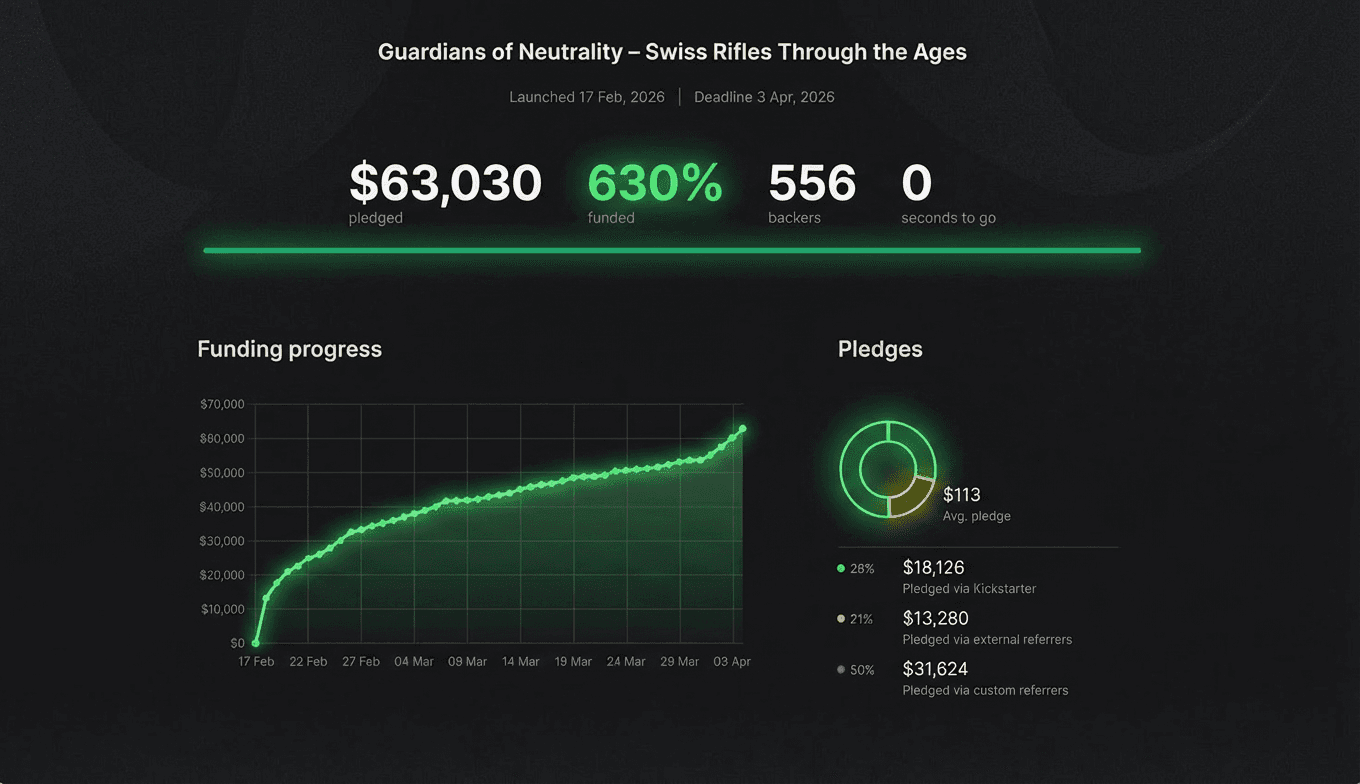
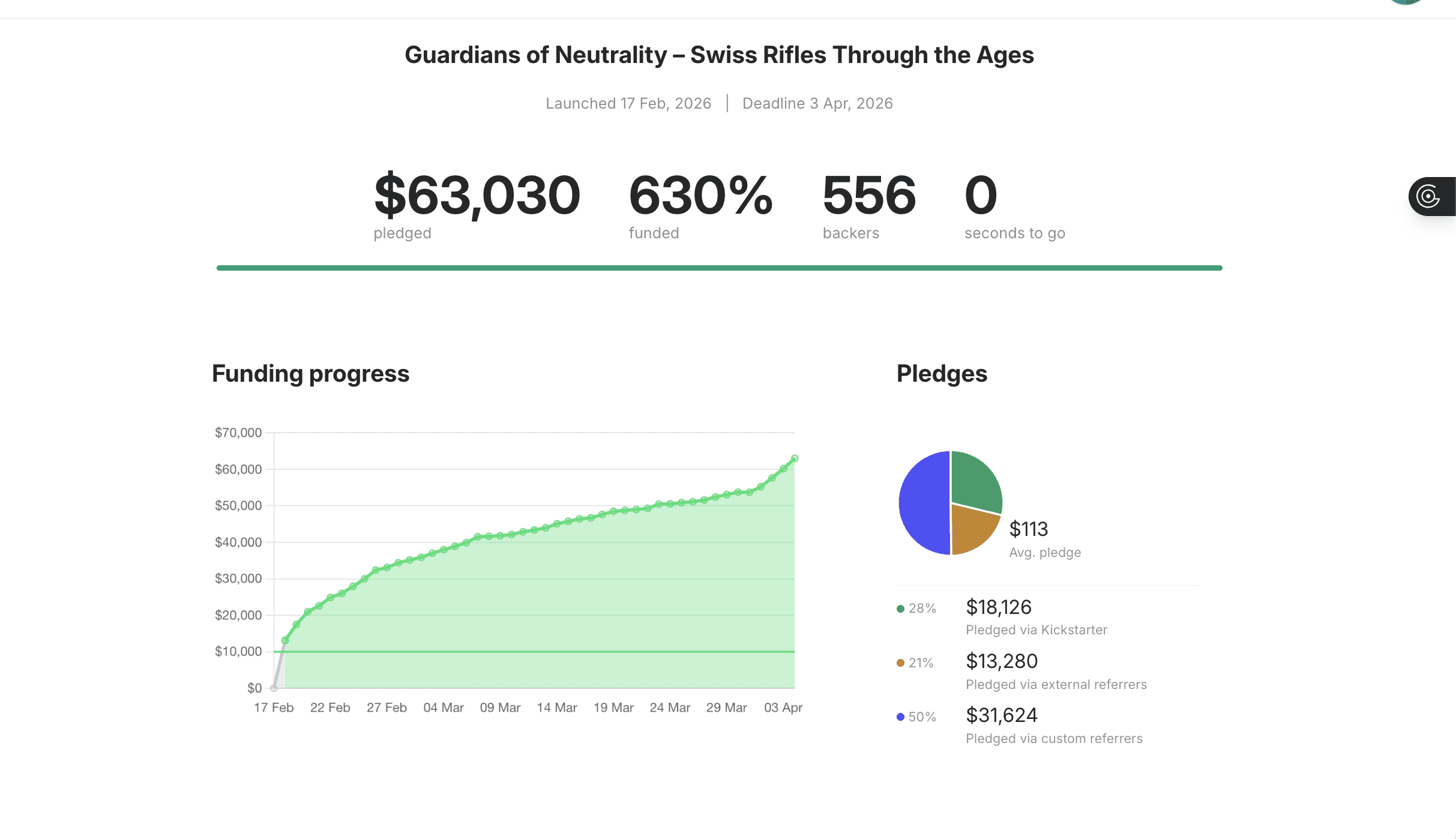
Total funds raised: $63,030
Initial goal: $10,000
Over 630% funded
556 backers
Campaign duration: 45 days (Feb 17 – Apr 3, 2026)
Awarded “Project We Love” by the Kickstarter team
Funding did not arrive in a single launch-day spike. The campaign grew steadily across the full 45 days, which is usually a sign that traffic, messaging, and backend systems are working in sync rather than against each other.
The Challenge
The project came in with strong foundations. The manuscript was finished, the photography was done, and the publisher had a track record from previous releases. But several gaps stood between the concept and a high-performing campaign.
The original messaging leaned heavily into describing the book and its content, but it was not structured to convert visitors into backers. There was no clear funnel guiding a curious reader from interest to pledge. Outside of the publisher’s existing audience, reach was limited, and the campaign risked depending too much on organic discovery, which is rarely enough to scale beyond an initial network.
Goal positioning also needed sharpening. A goal that is too high on a niche project can trigger hesitation, even when the audience is engaged. And on the operational side, financial setup and campaign infrastructure needed to be airtight to handle the volume the campaign was capable of generating.
Our Approach
We did not approach this as a copy refresh or an ad-buying exercise. We approached it as a complete crowdfunding system, where positioning, messaging, traffic, and backend operations all need to work together.
Every layer of the campaign was rebuilt or reinforced with one objective in mind: turn a niche but high-intent audience into consistent, scalable funding across the full campaign window.
High-Converting Campaign Copywriting
The first major step was rewriting the campaign page so it stopped reading like a product listing and started reading like an opportunity.
Most crowdfunding pages over-explain what something is and under-explain why it matters. We restructured the page so the opening sections grab attention quickly and establish relevance for the right reader. From there, the messaging gradually builds trust, communicates the depth of research and the quality of production, and frames the book as a definitive reference rather than just another title in the category.
The technical content was preserved, but it was reorganized into clean, scannable sections that move the reader forward instead of overwhelming them. The result was higher engagement on the page and a stronger conversion rate from visitor to backer.
Strategic Goal Setting & Positioning
The funding goal was set at $10,000. That number was not arbitrary. It was calibrated to be ambitious enough to fund production responsibly, but achievable enough to build early momentum and trigger the psychological shift that drives the rest of a campaign.
Once the campaign cleared its goal, every new visitor was no longer evaluating whether the project would succeed. They were joining something that was already working. That perception shift dramatically increased conversion and unlocked the kind of social proof that pushes campaigns from “funded” to multiples of the original target.
It also helped the campaign earn Kickstarter’s “Project We Love” badge, which added another layer of credibility for visitors arriving from outside the publisher’s existing audience.
Paid Advertising for Controlled Growth
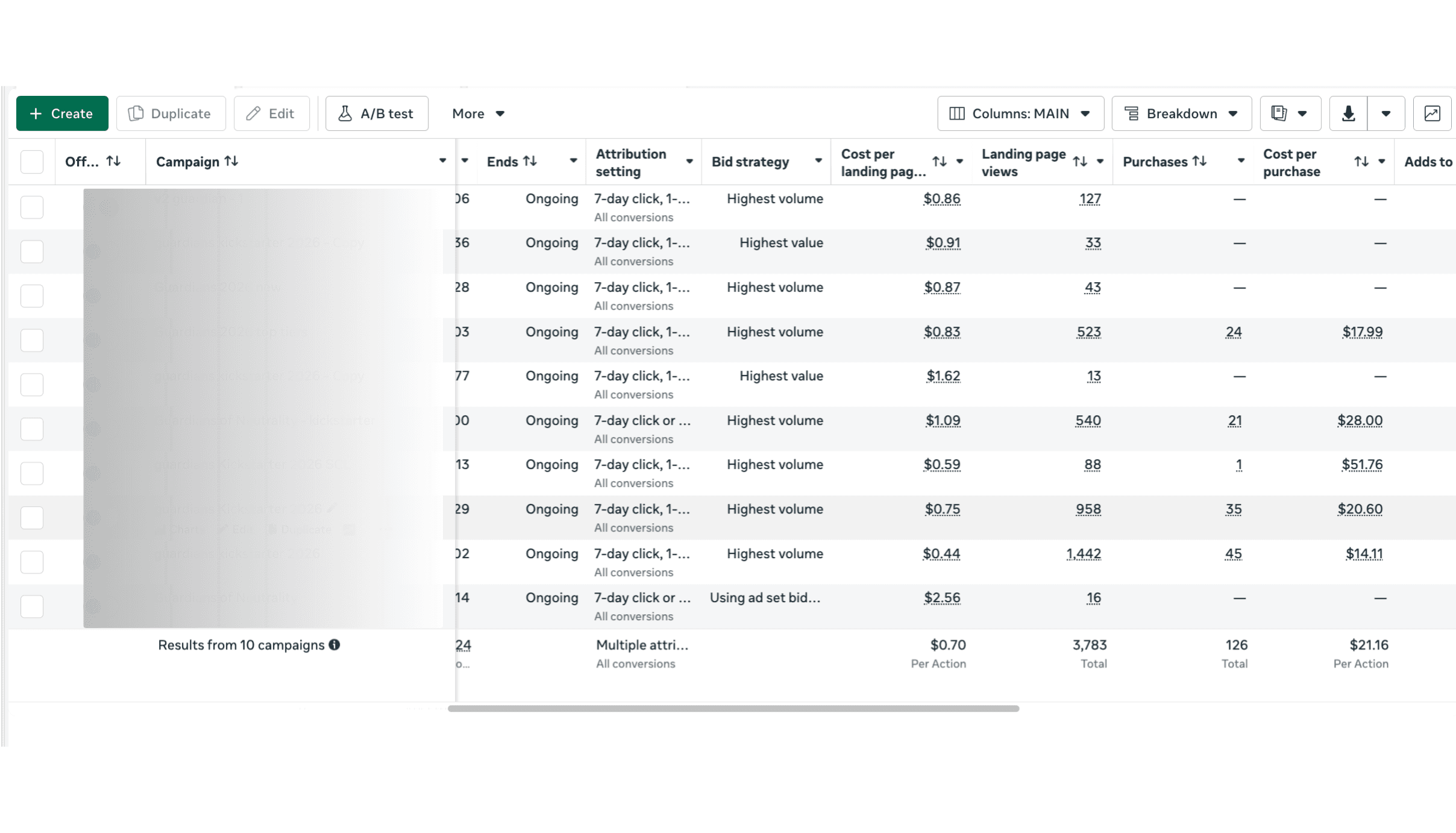
Organic reach within the existing follower base was strong but capped. To scale beyond it, we built a focused paid advertising strategy targeting the audiences most likely to back a project of this nature: collectors and enthusiasts of military firearms, Swiss and European military history audiences, and communities around historical research and reference books.
We tested multiple creatives, headlines, and angles, then scaled the strongest combinations gradually instead of pushing budget into anything unproven. That approach kept costs efficient and traffic quality high.
The result was a steady, controlled flow of qualified visitors throughout the 45-day window — exactly the conditions a campaign needs to grow past its goal instead of plateauing after the launch wave.
Reward Structure & Pledge Strategy
The reward tiers were structured to give backers a natural ladder, not a flat menu.
The $80 Kickstarter Edition Book served as the anchor pledge and brought in the majority of backers (343 pledges at this tier alone). From there, mid-range tiers around $185 captured collectors who wanted more than one volume, while the $300 super collector’s bundle and the limited $450 triple collector’s bundle gave the highest-intent buyers a clear premium option.
Stacking the tiers this way pushed average pledge value upward without alienating the entry-level backer, which is what allowed the campaign to clear $63,000 from 556 backers rather than relying on volume alone.
Backend & Campaign Setup Support
A campaign that scales to six figures of pledges only matters if the funds, fulfillment plan, and timeline hold up after the campaign ends.
Working with a publisher that had already shipped six previous books was a strong starting point, but we still tightened the operational side of the campaign. That included aligning the production schedule to start the moment the campaign closed, mapping a realistic delivery timeline (production end of April, three months to print, two months to warehouse, then individual shipping), and making sure the campaign communicated those expectations clearly on the page itself.
Solving this early meant the creator could focus on the campaign during the 45-day window without losing time to post-funding fire drills.
What Made This Campaign Work
The campaign worked because every element pulled in the same direction.
The audience targeting was precise, so the campaign reached people who were genuinely interested. The messaging was structured to convert, not just inform. The goal was set to build momentum quickly, and the reward ladder kept pushing pledge value upward. Paid traffic kept the funnel full across all 45 days, and the backend was built to handle the volume without breaking under it.
When all of those layers align, the campaign stops depending on luck and starts compounding on itself.
Key Takeaways
This campaign reinforces a few lessons that apply to almost every Kickstarter project:
A well-defined niche audience will outperform a broad one almost every time, as long as you can actually reach it. Messaging needs to do more than describe — it needs to persuade. Early momentum is everything, because the faster you cross your goal, the easier it becomes to scale past it. Consistent traffic is not optional, especially after the launch wave fades. And a strong reward ladder paired with a clean backend is what turns a successful campaign into a deliverable one.
The Bigger Picture
Crowdfunding is not just a fundraising channel. It is a system that combines storytelling, audience targeting, marketing, and operations. Guardians of Neutrality is a clear example that even a tightly niche, technically demanding project can deliver outstanding results when that system is built properly from the start.
How SVBY Agency Helped
Our role on this campaign was to bring structure, direction, and execution discipline. From rewriting the campaign page and positioning the goal, to running paid acquisition and tightening the reward and backend setup, every part of the campaign was optimized to perform across the full 45-day window.
At SVBY Agency, the focus is never just on launching a campaign. It is on building a system that converts and scales — and then operating it with the same level of attention from day one through fulfillment.
Final Thoughts
Raising over $63,000 from a $10,000 goal, with 556 backers and a Kickstarter staff pick, is not the result of a lucky launch day. It is the result of clear planning, sharp positioning, and consistent execution at every stage of the campaign.
For creators planning their next Kickstarter, the takeaway is the same one we see repeated across every successful project we work on: success in crowdfunding comes from preparation, positioning, and execution working together. When those three line up, even the most niche project can perform far beyond expectations.